New Due Date: the beginning of class on Monday, November 12th, 2012
Due Date: the beginning of class on Monday, November 5th, 2012 5% of your overall
grade
Assignment: Write an essay on
one of the topics below in
which you support your opinion with an argument. Papers must be typed, and must
be between 400-700 words long. Provide a word count on the first page of the
paper. (Most programs like Microsoft Word have automatic word counts.)
Possible Paper Topics (Choose ONE
of the following topics)
1.
Defend a Theory. Out of the seven
ethical theories that we’re studying—moral relativism, divine command theory,
natural law theory, utilitarianism, Kant’s ethical theory, Aristotle’s virtue
ethics, or Gilligan’s ethics of care—which do you think is best? Why? What are
two of the best criticisms that someone might make to that theory? How do you
reply to those criticisms to defend this theory? Be sure to fully explain &
defend your position.
2.
Criticize a Theory. Provide a detailed
criticism of one of the seven ethical theories we’ve discussed in class. First,
briefly explain the theory, and present what you take to be the best
criticism(s) of the theory. Then critically evaluate your criticism(s). That is,
consider how someone who supports the theory might respond to your criticisms,
and explain why you think these responses are unsuccessful.

3.
Moral
Realism. Moral realists believe (a) moral claims are objectively true or
false. Many moral realists also believe (b) there are no authorities whose
decrees make things morally right or wrong. Are these two claims consistent with
each other? Be sure to fully explain & defend your answer.
4.
Facts, Opinions, & the Hitler Intuition. In class, we’re discussing the
“Hitler Intuition”: Many people think that Hitler’s moral beliefs were not just
different from ours; they were mistaken. Many use this intuition as evidence
against moral relativism, and support for moral realism. Examine this
intuition.
-If you agree that it is solid evidence for moral
realism, explain exactly how this intuition works. What makes it objectively
true that Hitler was immoral? What is the basis of your judgment? In other
words, what makes moral claims objectively true? Which ethical theory we’ve
discussed do you think this supports? Explain and defend all your
answers.
-If you do not believe that this intuition is solid evidence for
objective morality, you are probably a relativist. Explain why this intuition
doesn’t provide enough evidence for the existence of an objective morality. Why
is it OK to say that Hitler’s actions weren’t objectively immoral? How is it
that Hitler is simply bad to me, but not objectively bad?
5.
The
Euthyphro Dilemma. The most common criticism of divine command theory is the
Euthyphro dilemma: “Is an action good because God commands it, or does God
command it because it is good?” Explain and evaluate this criticism. How is it a
criticism of divine command theory? Do you think this is a good or bad criticism
of divine command theory? Be sure to fully explain & defend your
answer.
6.
Choose Your Own Adventure! Write on a topic of your
choosing related to some or one of the ethical theories we’ve discussed in
class. (Sean must approve your topic by Friday, March 9th).
NOTE: This
is not a research paper! I expect you to explain and defend these theories based
on our discussions in class. You are not expected to do any outside research.
(If you do, however, be sure to cite your sources.)
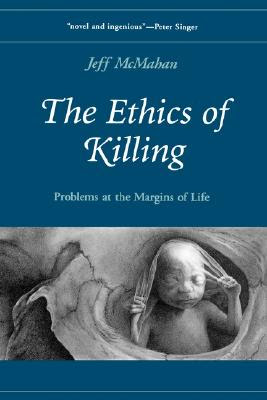 I don't often recommend an entire book to students, but if you're interested in some thoughtful analysis of abortion, euthanasia, animals, killing, and personhood, among other things, you should check out Jeff McMahan's The Ethics of Killing. Here's a short description of the book: